Brazil Santos Fancy
Brazil · 1st world producer · caffeine 1.13 to 1.15 %
Santos is also the name of the export port of the important coffee centre of São Paulo.
Gentle and mellow aroma ; medium body ; gentle acidity.
Find out more
Brazil is the 1st world producer ; 5 million people live from coffee there. From the Santos Jundiaí and Central do Brasil district (São Paulo), this coffee is used mainly as a base for blends ; it is gentle and marries with Central Americas by attenuating their acidity. It is also excellent drunk on its own. This coffee is characterised by a gentle and mellow taste.
Brazil Fazenda Arema
Brazil · Minas Gerais · Direct Trade
This coffee comes from the plantations of Martine and Euller, in the Minas Gerais region, renowned for its production of speciality coffees as much as of coffees that serve as a base for most blends in the world.
Marked, gentle and mellow aroma, with notes of caramel and chestnut.
Find out more
Benefiting from a microclimate due to its exceptional location in the Cerrado Mineiro, speciality coffees are a true must in this region. The farm is situated at 1,050 metres of altitude, between the two towns of Belo Horizonte and Uberlândia.
Euller comes from a family of coffee producers for three generations ; after living in Belgium for a few years, he decides in 2014 to return, with Martine and their children, to his roots. Since then, they invest each year in installations to improve the handling and quality of their coffees with each new harvest.
Brazil Daterra Sweet Yellow
Brazil · 1st world producer · caffeine 1.13 to 1.15 %
A must ! A rare and exceptional coffee grown by Daterra Farm, at the forefront of the coffee sector !
Gentle and mellow aroma ; medium body ; gentle acidity.
Find out more
Intensely gentle and mellow, elegant aroma, medium body and very gentle acidity. 5 million people live from coffee in Brazil. Brazil Daterra is grown and processed in a very precise way north of São Paulo, in the Campinas region ; it benefits from the Environmental Preservation, Rainforest Alliance and UTZ labels. It is packed before export under vacuum, in cartons of 2 × 12 kilos. It is characterised by great gentleness and marries with Central Americas by attenuating their acidity. It is also excellent drunk on its own.
Rainforest AllianceUTZ
Colombia Supremo Popayan
Colombia · 3rd world producer · caffeine 1.37 %
This country produces more or less 15 % of world production. Popayan is grown on volcanic soil, at altitude, on the foothills of the Andes cordillera, in the south-west of Colombia, in the department of Cauca.
Delicate, fine and pleasant aroma ; complete but light body ; light acidity.
Find out more
The bean size of Supremo is greater than that of Excelso quality. Supremo comes mainly from the private sector and its production is very carefully attended to.
Costa Rica SHB Tarrazú
Costa Rica · 10th world producer · caffeine 1.22 to 1.45 %
Robusta plantations are forbidden there ! The Tarrazú region is in the central valley ; mountain cultivation, sometimes on terraces to fight erosion and facilitate irrigation ; shade replaced by self-shading, which consists of increasing density ; wet method and semi-washed preparation, a recent method which consists of depulping the fresh cherries under water as soon as they arrive at the mill, then drying them at once, without standing in fermentation tanks.
Rich and excellent aroma ; complete and silky body ; fine acidity.
Find out more
One of the Central Americas best known for its SHB (Strictly Hard Bean – grade, acronym, firmness of the beans). A very good complete coffee, slightly acid. The Tarrazús are true grands crus.
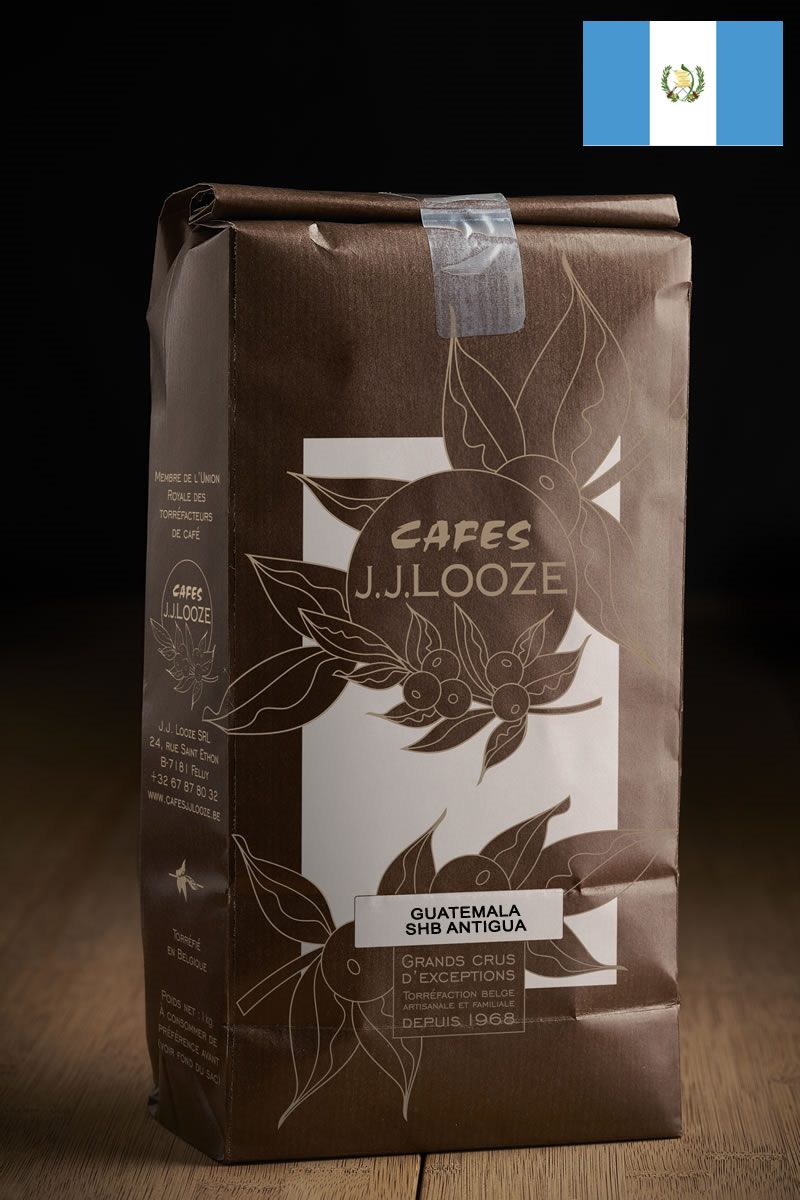
Guatemala SHB Antigua
Guatemala · 7th world producer · caffeine 1.32 %
Coffee is introduced to Guatemala by the Jesuits in 1750 ; cultivation is developed there by the Germans who immigrated after 1860.
Rich and unctuous aroma ; complete body ; gentle and balanced acidity.
Find out more
This coffee is grown in the centre, on the plateau and the volcanic ridges around Antigua. The rich volcanic soils, the little humidity, the intensity of the sun and the cool nights are so many elements that have a positive influence on the quality of this coffee.
The best Guatemalan coffees come from the Centre ; they are processed by the wet method, dried in the sun or in vertical and horizontal ovens heated with parchment or wood, mechanical then electronic and manual sorting, shade, no irrigation. The Strictly Hard Bean (1,600 to 1,700 metres) rank among the best coffees in the world : complete taste, balanced and aromatic acid cup.
Honduras HG Organique
Honduras · 13th world producer
Less prestigious than its neighbour Guatemala, this producing country has nevertheless been developing for some years excellent crus that are increasingly recognised.
Vanilla aroma, with notes of hazelnut and chocolate, a gentle and sweet taste ; medium body ; very gentle and well-balanced acidity.
Find out more
This coffee, bearing the mention HG (High Grown), is harvested between 1,000 and 1,250 metres : these altitude beans reach maturity more slowly and are denser than at a lower altitude, but they will be less acid than those harvested at a higher altitude.
Honduran coffees are grown mainly in the centre and south-west of the country, in the Santa Barbara region, but also in Copán, Lempira, Comayagua and El Paraíso. They are washed arabicas, grown under shade, harvested by hand in 2 or 3 passes.
OrganicBE-BIO-01
Mexico HG Organique
Mexico · Chiapas, Tapachula region
This coffee is grown in Chiapas, a state in the south of Mexico, in the Tapachula region.
Gentle aroma, with notes of caramel and nut, a chocolate touch ; light to medium body ; clear, light and delicate acidity.
Find out more
Close to the Guatemalan border, it can rival the finest coffees of Guatemala. A variety of arabica grown between 1,100 and 1,800 metres, on volcanic and shaded soil. Harvesting there is by hand and is carried out in three passes ; the coffee is wet-processed and fermented for 15 hours. 3 million people live from coffee in Mexico, where it is the leading export commodity.
OrganicBE-BIO-01
Nicaragua Maragogype
Nicaragua · 28th world producer
Maragogype is a variety of arabica derived from Typica, known for its very large and long beans.
Very fine, subtle, velvety and gentle aroma ; light and delicate body ; very long and marked acidity.
Find out more
It is found in Mexico, Guatemala and Nicaragua. The coffee tree is taller than other arabica varieties and less productive, which explains its relative rarity on the markets and its higher price. This variety was discovered in the town of the same name, Maragogipe, in Brazil.
Most Maragogypes come from the Matagalpa region, north of Lake Managua, in the centre of the country. This Maragogype comes from the north of the region. The soil of volcanic origin is of great fertility ; Maragogype is harvested between 1,500 and 2,000 metres. These coffees are wet-processed ; depulping is carried out by the peasants, who deliver their coffee in parchment to the cooperatives.
Panama SHB Boquete « La Gloria Estate »
Panama · Baru Indian High · 1,360 to 1,500 m
This exceptional coffee is harvested in the west of Panama, on the slopes of the Baru volcanic chain, between 1,360 and 1,500 metres.
Chocolate, buttery, sweet aroma, a touch of honey, gentleness on the finish.
Find out more
Wet-process treatment. Relatively cool temperatures and fog contribute to a slow maturation of the cherries.
The size of farms in Panama is relatively small, from 1 to 10 hectares. The prices of these speciality coffees are fairly high : there is indeed a strong demand for land purchase from North Americans, and many plantations have been sold and have changed use. Wage standards are also higher than those of neighbouring countries and seasonal workers are better paid there.
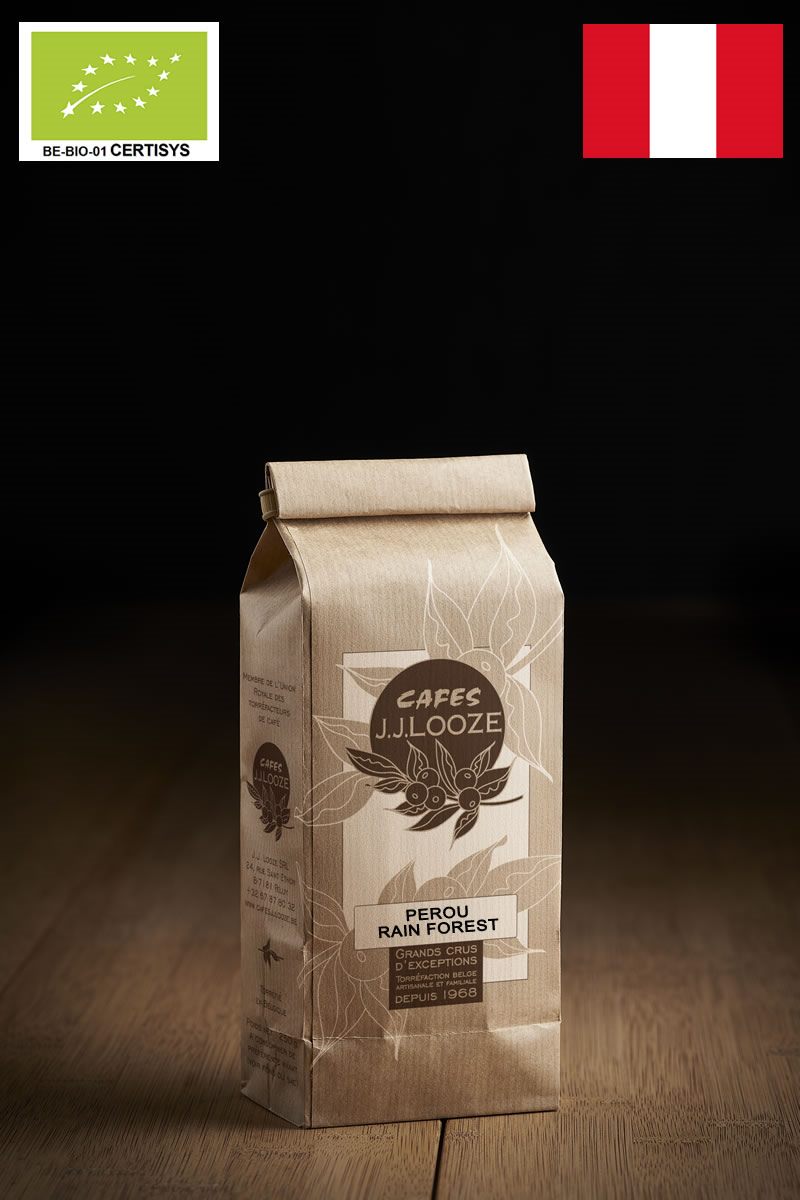
Peru, Fair Trade
Peru · 17th world producer · caffeine 1.20 %
This coffee comes from cooperatives grouping 200 coffee-producing families in the Lamas region, the folkloric capital of Amazonia.
Fine and velvety aroma ; medium body ; gentle and delicate acidity.
Find out more
Coffee is introduced to Peru in the 18th century and today constitutes the 1st export product. 92 % of production comes from the forest regions of the centre. Shade is used at 95 %.
This washed arabica of Chanchamayo type comes from the central regions ; a coffee of superior quality, a favourable climate, modern cultivation and processing. Hand sorting and wet-method preparation. Washed arabica, good acidity, excellent body, gentle cup, blue-green green beans, a fine bean. These arabicas can be superior to the very good classic Central Americas from the point of view of appearance and cup.
OrganicFair TradeRainforest AllianceBE-BIO-01
Decaffeinated Peru
Peru · 17th world producer
This coffee is decaffeinated by the gentle CO2 (carbon dioxide) method.
Fine and velvety aroma ; medium body ; gentle and delicate acidity.
Find out more
The beans are soaked in water, they swell and the caffeine becomes « mobile » ; then they are aerated, the caffeine will bind to the carbon dioxide, which will be eliminated by drying the coffee (evaporation). The caffeine and carbon dioxide are then separated to be reused. Decaffeination will give you a coffee whose taste and aroma will equal full coffees, while assuring you a good night’s sleep…
OrganicBE-BIO-01
Dominican Republic Barahona
Dominican Republic · 25th world producer · caffeine 1.37 %
This arabica is grown between 600 and 1,300 metres, south of the central cordillera, in the Barahona region, in the south-west of the country.
Aroma of good suave and balanced aroma, with nut notes ; full, lively and rich body ; moderate acidity.
Find out more
These coffees can be considered the best and similar to Jamaican coffees.
It rains all year ; ocean winds and currents allow the cherry to develop slowly to produce a bean of great quality. Hand picking, wet-method fermentation of the beans, sun drying, shade of the plantations (avocado, orange, banana, guava, macadamia). Harvest from August to February.